Adding a wing to existing residential architecture, whether historical or contemporary, requires both humility and confidence.
On the one hand, the art and craft embodied by historic architecture must be respected. On the other hand, demands of modern family life and economic realities must also be accommodated. The absolutist approach recommended by many preservationists is overwrought and unhelpful in the real world.
Balancing Respect for the Past With the Needs of Today
Our office evolved a two pronged approach that has successfully bridged these potentially conflicting goals many times. When an existing home layout is not capable of providing the kinds of amenities required by the client we initially investigate internal capacity for growth. For example, excavating the basement by several feet might offer plenty of new space for a game room, a wine cellar or a home theater. Exploring an attic as a possible master bedroom or a garage as a potential office has often paid us extraordinary dividends. But sometimes, many times, the potential is just not there. In those cases we simply design an adjoining structure – one that addresses the client’s desires while limiting the impact to the original structure.
A Surgical Connection Between Old and New
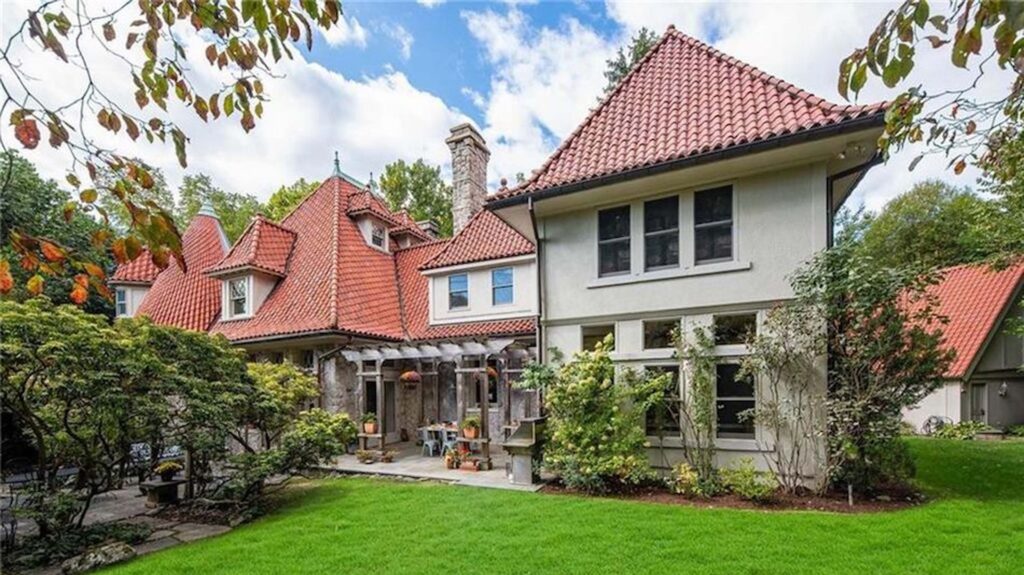
For this 19th century caretaker’s cottage in Irvington, NY, we surgically converted a window into a door-size passage that led to an addition containing at the ground floor a French-inspired country kitchen, an informal dining space, an interior pergola and access to an outdoor dining space. At the second floor we provided a generous master-bedroom suite. The resulting hybrid architecture respected the past while accommodating the present, without compromising either.