Masterplanning and landscape design allow us to work at a scale where architecture, topography, climate and community intersect. At this level, the task extends beyond shaping a single building. It becomes an exercise in organizing land, circulation, natural systems and future growth in a way that is thoughtful, resilient and responsive to context. Our work in this field reflects the same disciplined, narrative-driven approach that guides all of our architectural services.
UNDERSTANDING LAND AND CONTEXT
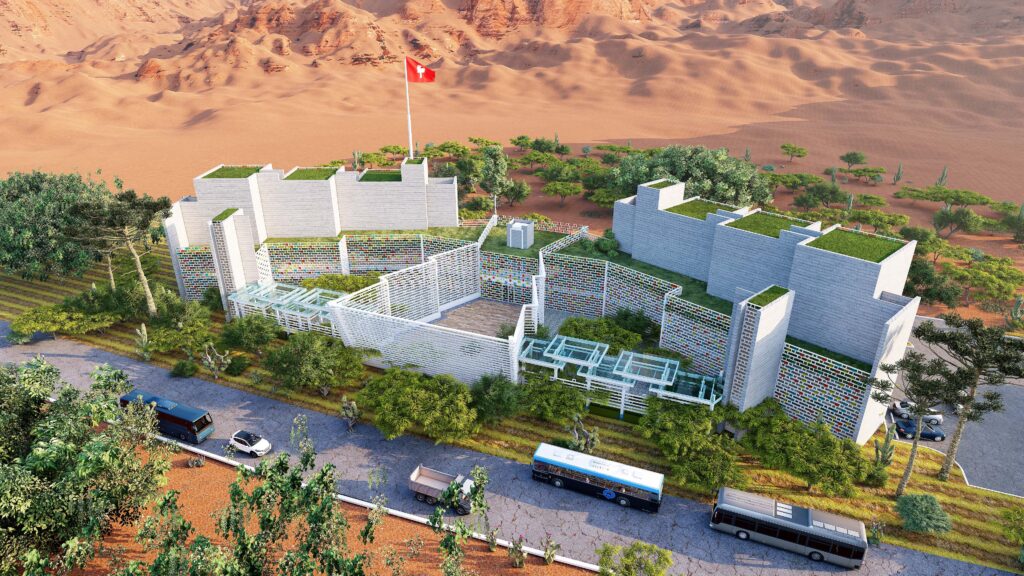
Every masterplan begins with a careful study of the site. We examine slopes, vegetation, environmental conditions, drainage patterns, local ecosystems and existing infrastructure. Sun, wind and water movement reveal natural opportunities for orientation, access and open space. These early insights help us determine where development should occur, where it should be limited and how the land can be shaped to support long-term use.
ORGANIZING PROGRAM AND CIRCULATION
Masterplanning requires clarity of movement — how people, vehicles and services navigate a site safely and efficiently. We diagram hierarchies of pathways, roads, pedestrian networks and shared spaces. Adjacent uses are balanced to ensure privacy, safety and comfort. Open spaces are positioned to encourage social life, recreation or quiet reflection, depending on the needs of the community or client.
ARCHITECTURE AND LANDSCAPE AS ONE
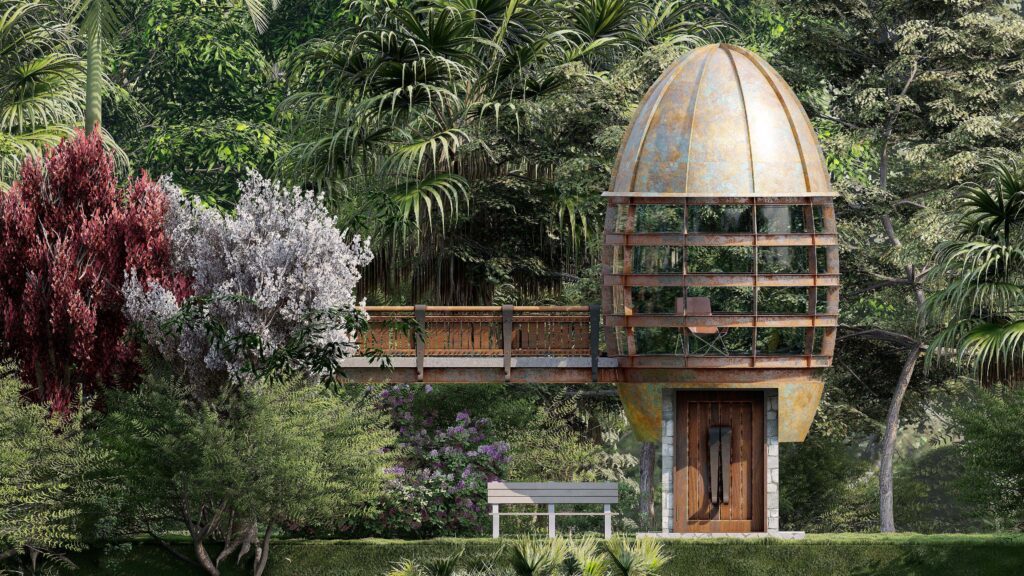
We approach landscape as an extension of architecture, and architecture as an expression of the landscape it inhabits. Buildings are placed carefully to frame views, protect natural features and reinforce the overall identity of the site. Materials, planting strategies and microclimatic responses are chosen to complement both the built environment and the natural setting. The result is a unified experience where interior and exterior space support one another.
ENVIRONMENTAL AND TECHNICAL CONSIDERATIONS
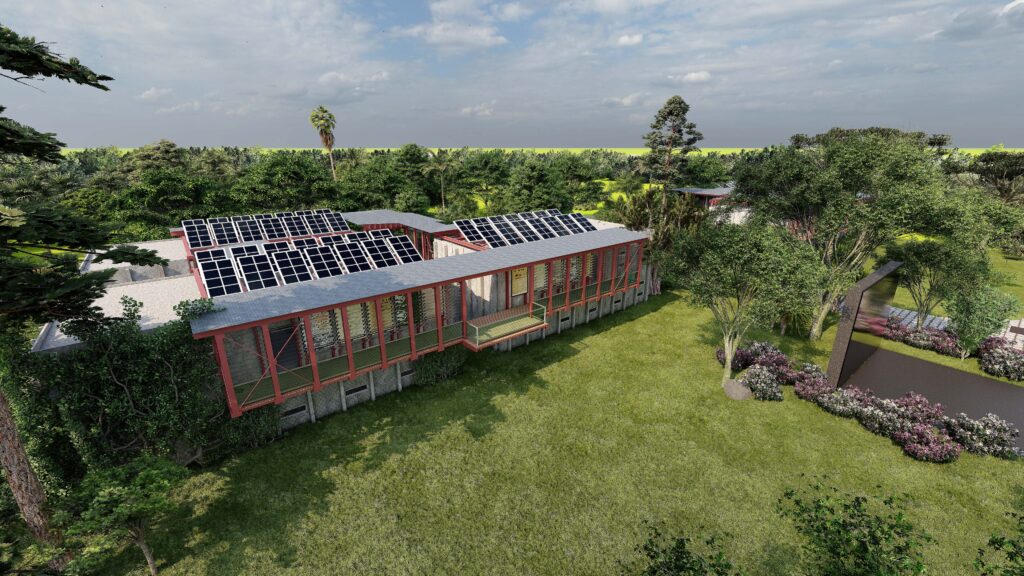
Masterplanning is a technical discipline as much as a creative one. We evaluate stormwater strategies, environmental impact, solar exposure, access to utilities, and opportunities for sustainable systems including rain capture, passive cooling and photovoltaic integration. When appropriate, we incorporate prefabrication or phased development options that respond to local resources, climate limitations or construction logistics.
LONG-TERM VISION AND FLEXIBILITY
A successful masterplan must balance structure with adaptability. It provides a clear directional framework while allowing for future changes in program, technology, population or economics. Our plans are developed to guide immediate decisions while supporting long-term growth, ensuring that the site remains functional, coherent and resilient over time.
GUIDING THE DEVELOPMENT PROCESS
The outcome of a masterplanning engagement is a well-reasoned, illustrated framework that organizes land use, circulation, open space and building potential. Clients receive a document that clarifies what is possible, what is advisable and how best to proceed. This foundation becomes essential when coordinating with local authorities, engineers, developers or community groups.
WHY YOU SHOULD ENGAGE OUR TEAM
We have picked up more than a few tricks since opening our doors in 1991
VISION
Our job: morf your intangible objectives into cool solutions
EXPERTISE
Decades of success…at your service
TRUST
Satisfied clients and unique solutions…the fruit of experience
LET’S START WITH A CONVERSATION
From civic spaces to corporate campuses to boutique developments, every project begins with a dialogue. Let’s explore how design can transform ambitions into enduring places.